Create Your Perfect Movie-Watching Space With Comfortable, Custom Home Theater Seating
Imagine watching your favorite movie in a beautiful home theater. The lights are dim, the screen is large, and the surround sound makes every scene feel real. You lean back in a soft, comfortable chair, stretch your legs, and enjoy the moment.
That is what a great home theater experience should feel like.
When people think about building a home theater, they often focus on the television, projector, or sound system. These are important, but there is another part of the room that deserves just as much attention: home theater seating.
The right seating can turn an ordinary entertainment room into a comfortable place where your family and friends love spending time.
At Home Cinema 4U, we understand how important comfort, design, and practical planning are when creating a home entertainment space.
Whether you are planning a new home theater in New Jersey or upgrading your current entertainment room, choosing the right seating can make a big difference.
In this guide, we will explore comfort, customization, construction, durability, design options, and the growing appeal of home theater chaise lounges.
1. COMFORT: Enjoy Every Movie Without Discomfort
Why Comfort Matters in Home Theater Seating
Think about the last time you watched a long movie while sitting in an uncomfortable chair.
Maybe your back started hurting. Perhaps your legs felt tired, or you had to change your sitting position again and again.
An uncomfortable seat can take away the fun of watching even the best movie.
That is why comfort should be one of the first things you consider when choosing home theater seating.
A well-designed theater chair supports your body and helps you relax during long movies, sports events, and gaming sessions.
Soft Cushions and Supportive Seating
Good home theater seating should feel soft without losing its support.
Seats that are too soft may allow your body to sink too deeply. Seats that are too firm may feel uncomfortable after a while.
A balanced combination of cushioning and support is often the best choice.
When testing a theater chair, pay attention to how it supports your lower back, shoulders, neck, and legs.
Your feet and knees should also feel comfortable when the chair is upright.
Reclining Chairs for Better Relaxation
Reclining theater chairs are popular because they allow you to change your sitting position.
Instead of sitting upright throughout the movie, you can lean back and raise your legs.
Some seating models offer powered reclining systems that let you adjust the chair with the touch of a button.
Other models use manual reclining controls.
Both can provide a comfortable experience when the chair is properly sized.
Extra Features for Comfort
Depending on the seating model, modern theater chairs may include:
- Adjustable headrests
- Built-in lumbar support
- Padded armrests
- Extendable footrests
- Cup holders
- USB charging ports
- Heated seating
- Massage functions
Not every chair needs all these features.
The best choice is a chair that feels comfortable, fits your room, and supports the way you enjoy entertainment.
2. CUSTOMIZATION: Create Seating That Matches Your Lifestyle
Every Home Theater Is Different
No two home theaters are exactly the same.
Some homeowners have a large room where they can install several rows of theater chairs. Others have a smaller living room that needs a simple seating arrangement.
That is why customization is an important part of home theater planning.
Custom seating allows you to choose furniture that fits your space, style, and comfort needs.
Instead of arranging your room around furniture that does not fit, you can plan seating that works with the room.
Choose the Right Seating Layout
One of the first decisions is how many people you want your theater to accommodate.
For example, a small family may prefer four reclining chairs arranged in a single row.
A larger family might choose two rows of seats.
If you regularly invite friends over for movie nights, you may want extra seating.
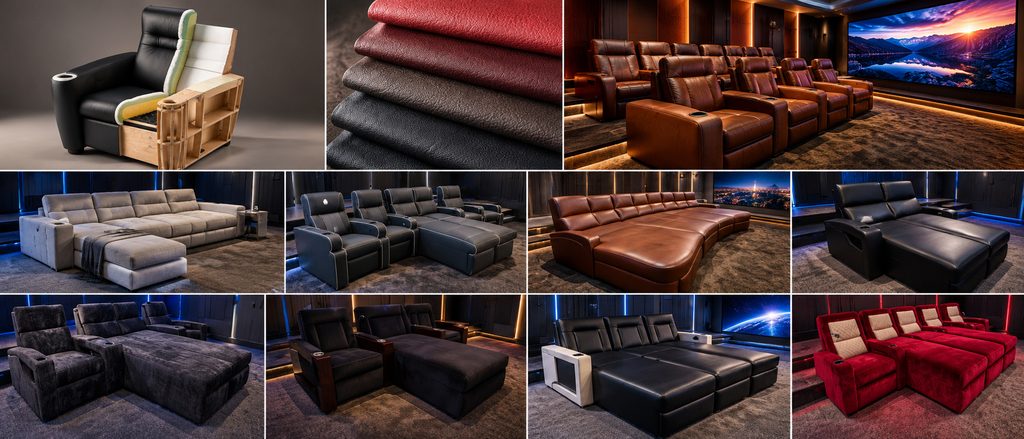
Popular layouts include single-row seating, double-row seating, curved rows, theater sofas, and individual recliners.
Select Your Favorite Upholstery
The material covering your seats affects both appearance and comfort.
Leather is a popular choice because it provides a clean, premium look and is often easy to wipe down.
Fabric seating can feel soft and warm. It also comes in many colors and textures.
Some synthetic upholstery options are designed to resist everyday wear and make cleaning easier.
When choosing a material, think about how often the seating will be used and whether children or pets will share the room.
Customize the Colors
Your theater seating should match the overall design of your entertainment space.
Dark colors such as black, charcoal, navy blue, and deep brown can create a classic cinema appearance.
Lighter colors such as beige, cream, and soft gray can make a modern entertainment room feel open and welcoming.
The goal is to create a room that looks beautiful and feels comfortable.
Personalize the Features
Depending on the available models, customization may include different armrest styles, storage compartments, lighting, charging options, and reclining controls.
Before choosing special features, decide which ones you will actually use.
A simple, comfortable chair can sometimes be a better choice than a complicated seat with features you rarely need.
3. CONSTRUCTION: What Makes Quality Theater Seating?
Strong Frames Are Important
A beautiful theater chair should also be built with reliable materials.
The frame is one of the most important parts of the chair because it supports the seat and the person using it.
Common frame materials include hardwood, engineered wood, and metal.
The quality of the design and how the materials are joined can affect the chair’s strength and stability.
A well-built frame should feel solid and should not move or make unusual noises during normal use.
High-Quality Cushioning
Cushioning is another important part of theater seating construction.
Different chairs use different foam types, padding materials, and support systems.
High-density foam is often used in seating because it can provide consistent support.
However, foam density alone does not tell you everything about comfort or durability.
The complete cushion design matters.
A good seat should support your body while allowing you to sit comfortably for long periods.
Reliable Reclining Mechanisms
Reclining chairs include moving parts that must work smoothly.
Manual reclining chairs use mechanical controls, while powered models use motors and electrical components.
When choosing a reclining chair, check whether the movement feels smooth and controlled.
It is also useful to learn about the manufacturer’s warranty and the availability of replacement parts.
Strong Stitching and Finishing
Small construction details can affect how a chair looks and performs over time.
Neat stitching, secure upholstery, well-fitted cushions, and carefully finished edges help create a polished appearance.
Before purchasing seating, take a close look at these details.
Good construction matters because home theater seats may be used regularly for many years.
4. BUILT TO LAST: Seating for Years of Entertainment
Invest in Long-Term Comfort
Home theater seating is more than a piece of furniture.
It is part of your home entertainment experience.
When you spend money designing a beautiful cinema room, you want the seating to remain comfortable and attractive for years.
Choosing quality materials and suitable construction can help reduce the need for frequent replacements.
Choose Materials That Fit Your Home
The best upholstery choice depends on your lifestyle.
For households with young children, stain-resistant materials may be especially useful.
For homeowners who prefer a classic luxury appearance, leather may be attractive.
Some fabrics are designed to handle frequent use while maintaining their appearance.
Always review the manufacturer’s care instructions before cleaning any seating material.
Simple Maintenance Tips
You can help keep your home theater seating in good condition by following a few basic habits:
- Clean spills as soon as possible.
- Use cleaning products recommended for the upholstery.
- Avoid placing sharp objects on seats.
- Check reclining mechanisms regularly.
- Keep liquids away from electrical controls.
- Avoid exceeding the manufacturer’s weight limits.
- Protect upholstery from long periods of direct sunlight.
Regular care can help maintain the appearance and function of your chairs.
Check the Warranty
Before purchasing theater seating, ask about warranty coverage.
Different manufacturers may offer separate warranty terms for the frame, upholstery, reclining mechanism, and electrical components.
Understanding the warranty can help you make a better purchasing decision.
A durable theater chair should offer a good balance of comfort, materials, and long-term value.
5. DESIGN YOUR OWN: Make Your Home Theater Truly Yours
Start With Your Room Size
Designing your own theater seating arrangement begins with understanding your room.
Measure the length and width of the space before choosing furniture.
You also need to consider the location of the screen, doors, walkways, and other equipment.
Large chairs can look impressive, but they should not make the room feel crowded.
A comfortable layout should allow people to enter and leave their seats easily.
Plan the Best Viewing Distance
The distance between your seats and the screen affects your viewing experience.
If you sit too close to a very large screen, watching may feel uncomfortable.
If you sit too far away, you may not fully enjoy the picture detail.
The ideal distance depends on the screen size, display resolution, and personal preference.
Try different seating positions before finalizing your theater layout.
Create Multiple Seating Rows
A larger home theater may include two or more rows of chairs.
In these rooms, the back row may need to be raised on a platform, often called a riser.
A riser can help people in the back row see over the seats in front.
However, the platform must be carefully designed to allow safe movement and suitable headroom.
Lighting near steps can also improve visibility when the room is dark.
Match the Seating With Your Interior Design
Your seating should look like a natural part of the room.
For example, a modern theater with dark walls and soft blue lighting may look attractive with black leather recliners.
A bright family entertainment room might benefit from a comfortable gray sofa with matching lounge chairs.
You can also coordinate seating with carpeting, wall finishes, lighting, and acoustic panels.
At Home Cinema 4U, homeowners can explore home entertainment solutions and discuss the design details that matter to their projects.
Design for Family and Friends
Think about how you will use the room most often.
If movie nights are mainly for your family, a comfortable theater sofa may be practical.
If you frequently invite guests, individual recliners may offer more personal space.
If you prefer relaxing while watching television, a chaise lounge could be a great addition.
Your home theater should reflect your daily routine rather than simply copying the appearance of a commercial cinema.
6. HOME THEATER CHAISE LOUNGE: Relax in a New Way
What Is a Home Theater Chaise Lounge?
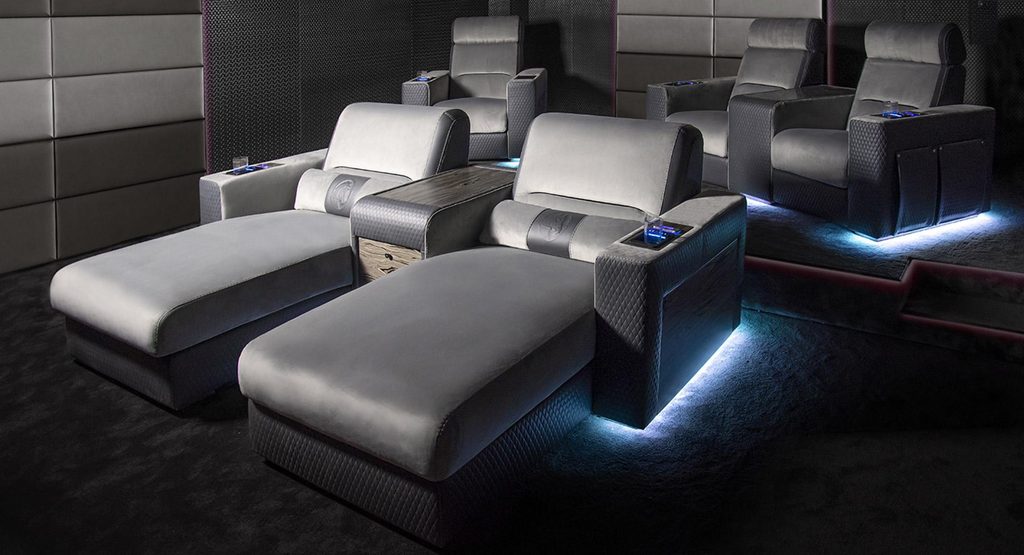
A chaise lounge is a long, comfortable seat that allows you to stretch out your legs while relaxing.
Unlike a traditional theater chair, which usually has a separate seat and footrest, a chaise lounge often has an extended seating surface.
This makes it an attractive option for homeowners who enjoy a relaxed viewing experience.
A home theater chaise lounge can add a touch of luxury while making the room feel more like a comfortable private retreat.
Why Choose a Chaise Lounge?
One of the biggest benefits of a chaise lounge is the freedom to stretch out.
It may be ideal for watching long movies, enjoying television shows, reading, or simply relaxing.
A chaise lounge can also make an entertainment room feel less formal than traditional rows of theater seating.
It works particularly well in spaces that serve as both a media room and a family lounge.
Chaise Lounge vs. Traditional Theater Recliner
Both seating styles have their advantages.
A traditional theater recliner usually provides a more defined personal seat with adjustable reclining positions.
A chaise lounge offers an extended surface for relaxing and stretching your legs.
Recliners can work well in organized theater rows.
Chaise lounges may be especially attractive in larger media rooms or flexible seating areas.
The right option depends on how you want to use your space.
Modern Chaise Lounge Designs
Home theater chaise lounges are available in different shapes, sizes, and materials.
Some have simple modern designs with clean lines.
Others feature deep cushions, padded backs, and wide seating areas.
Depending on the model, a chaise lounge may also be part of a modular sofa arrangement.
This can help homeowners create an entertainment area that feels both stylish and comfortable.
Where Should You Place a Chaise Lounge?
A chaise lounge often needs more floor space than a traditional chair.
Before choosing one, measure the available room carefully.
Make sure the lounge does not block doors or walking areas.
It should also provide a comfortable view of the screen.
In some rooms, a chaise lounge may work best in the front seating area, where viewers have enough space to stretch out.
In other rooms, it can be placed along the side as an additional relaxation spot.
7. Home Theater Seating for Small and Large Rooms
Small Home Theater Seating Ideas
You do not need a large house to enjoy comfortable theater seating.
A smaller entertainment room may work well with two reclining chairs or a compact theater sofa.
Wall-mounted televisions and carefully arranged speakers can help save space.
Choose furniture that provides enough room to move around comfortably.
Avoid adding too many large chairs just to increase seating capacity.
Large Luxury Home Theater Seating
A dedicated home cinema may offer more freedom when choosing seating.
You might include multiple rows, powered recliners, chaise lounges, and larger walkways.
A large room also provides opportunities for decorative lighting and carefully planned seating positions.
However, even spacious theaters require proper layout planning.
The goal is to give every viewer a comfortable seat with a clear view of the screen.
8. How to Choose the Best Home Theater Seating in New Jersey
Before buying home theater seating, it helps to make a few important decisions.
First, decide how many people will usually watch movies together.
Next, measure your entertainment room and think about where each chair will go.
You should also consider your preferred seating material, reclining features, and overall budget.
If possible, try sitting in different chair styles before purchasing.
Pay attention to seat depth, back support, armrest height, and the amount of space needed when the chair is fully reclined.
Finally, consider how the seating will match your television, projector, speaker system, and room design.
Good planning can help you create a theater that feels comfortable from the first movie night.
9. Why Work With Home Cinema 4U in New Jersey?
Creating a home theater involves more than choosing individual products.
The screen, audio system, lighting, seating, and room layout should work together to create an enjoyable experience.
Based in Monroe Township, New Jersey, Home Cinema 4U focuses on home entertainment and audio-video solutions.
If you are planning a new theater room or upgrading an existing space, the team can discuss your entertainment goals and installation requirements.
Seating should be considered early in the planning process because chair positions affect screen visibility, speaker placement, and available walking space.
Whether you are interested in a modern family media room or a luxury private cinema, thoughtful planning can help bring your ideas together.
For questions about seating layout and home theater planning, contact Home Cinema 4U to discuss your project and available options.
Frequently Asked Questions About Home Theater Seating
1. What is the best seating for a home theater?
The best seating depends on your room size and comfort needs. Reclining chairs, theater sofas, and chaise lounges are all popular choices. Look for good back support, comfortable cushions, and a size that fits your space.
2. Are leather home theater seats better than fabric seats?
Both materials have benefits. Leather offers a premium appearance and can be easy to clean. Fabric may feel softer and is available in many styles. Choose the material that best fits your comfort preferences and lifestyle.
3. How much space do reclining theater chairs need?
The required space depends on the chair’s size and reclining mechanism. Some models need extra clearance behind the seat, while wall-hugging models may need less. Always check the manufacturer’s measurements.
4. Can I install home theater seating in a small room?
Yes. Compact recliners, small theater sofas, and carefully planned layouts can work well in smaller spaces. Accurate measurements are important.
5. What is a home theater chaise lounge?
A home theater chaise lounge is an extended chair or sofa-style seat designed for relaxing with your legs stretched out. It can be a comfortable option for movies, television, and casual entertainment.
6. Are powered theater recliners worth buying?
Powered recliners can provide convenient seating adjustments at the touch of a button. They may be useful for homeowners who want easier control over their seating position. Manual recliners can also be a good choice.
7. How long does home theater seating last?
The lifespan depends on the construction, materials, amount of use, and maintenance. Well-made seating that is cared for properly may remain comfortable for many years.
8. Can home theater seating have cup holders and USB charging?
Yes. Many modern seating models offer features such as cup holders, USB ports, storage compartments, and adjustable headrests. Availability varies by manufacturer and model.
9. Should my home theater have one row or two rows of seating?
One row may be ideal for smaller rooms. Two rows can provide more seats, but the back row may need a raised platform to maintain clear screen visibility. Room size and safety should guide the decision.
10. Can Home Cinema 4U help me plan a home theater in New Jersey?
Home Cinema 4U provides home entertainment and AV solutions. You can contact the team to discuss your theater design, seating layout, and installation needs, including which seating-related options are available for your project.
Final Thoughts: Make Every Seat the Best Seat in the House
A great home theater is about more than a large screen and powerful speakers.
It is about creating a place where you can relax, enjoy your favorite movies, and spend quality time with family and friends.
Comfortable seating plays an important role in making that experience possible.
From soft cushions and adjustable recliners to custom layouts and modern chaise lounges, there are many ways to design a space that feels right for you.
Focus on comfort, quality construction, long-term durability, and a layout that fits your room.
Your ideal home theater does not need to look exactly like someone else’s. It should reflect your personal style and the way you enjoy entertainment.
If you are planning a home theater in New Jersey, Home Cinema 4U can help you explore your ideas and discuss the right solutions for your space.
Contact Home Cinema 4U
Home Cinema 4U – Home Theater & AV Services in New Jersey
Address: 5 Jasmine Dr, Monroe Township, NJ 08831
Phone: +1 (631) 830-9033
Email: info@homecinema4u.com
Website: https://homecinema4u.com/
Ready to Design Your Dream Home Theater?
Contact Home Cinema 4U Today to discuss your entertainment room and discover how thoughtful planning can create a more comfortable home cinema experience.