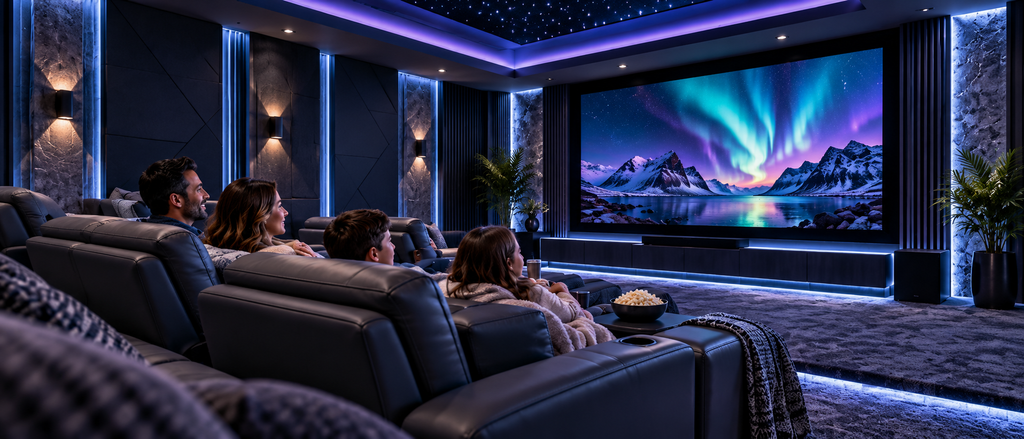
A home theater can completely change the way you enjoy movies, sports, music, and family time. Instead of going to a crowded movie theater, you can enjoy a cinema-like experience inside your own home. With the right screen, speakers, lighting, seating, and smart controls, even a simple room can become a comfortable entertainment space.
If you are looking for professional home theater design and installation services in New Jersey, Home Cinema 4U can help you plan and build a system that matches your home, your needs, and your lifestyle.
A good home theater is not only about buying a large television or expensive speakers. Every part of the room needs to work together. The screen position, speaker placement, lighting, sound control, wiring, seating distance, and equipment setup all play an important role.
In this guide, we explain what professional home theater installation includes, why planning matters, and what homeowners in New Jersey should consider before starting a home cinema project.
What Is a Home Theater?
A home theater is a room or entertainment area designed to give you a better movie and audio experience at home.
Some homeowners use a dedicated room only for movies. Others create a home theater in a living room, basement, family room, or other part of the house.
A home theater may include:
- Large TV or projection screen
- Projector
- Surround sound speakers
- Subwoofer
- AV receiver
- Comfortable theater seating
- Smart lighting
- Acoustic wall treatment
- Streaming devices
- Smart controls
- Hidden wiring
- Wi-Fi and network connection
The final setup depends on the size of your room, your budget, and how you want to use the space.
Why Professional Home Theater Design Matters
Many people think they can simply buy a television, connect speakers, and create a theater.
It may work, but it may not give you the experience you expected.
Professional home theater design starts with the room.
Before installing equipment, the installer should understand where the screen will be placed, where people will sit, how sound will move through the room, and where the speakers should be installed.
Small details can make a big difference.
For example, if a screen is installed too high, watching movies for a long time can become uncomfortable. If speakers are installed in the wrong place, dialogue may be difficult to hear. If the room has too much light, the picture may look washed out.
A professional design helps avoid these problems before installation begins.
Custom Home Theater Design for New Jersey Homes
Every home is different.
A large basement in Monroe Township may require a different theater design than a smaller living room in another New Jersey home.
That is why custom planning is important.
At Home Cinema 4U, a home theater project can be planned around the available space and the way the homeowner wants to use it.
Some people want a luxury private cinema.
Others may want a clean and simple family entertainment room.
There is no single design that works for every home.
A custom home theater can include the right mix of audio, video, lighting, seating, networking, and smart-home technology.
Choosing the Right Screen
The screen is one of the most important parts of a home theater.
You may choose between a large television and a projector with a projection screen.
Large TVs can be a good option for rooms with more natural light. They are also simple to operate and provide a bright picture.
A projector can create a larger cinema-style image. It is often used in dedicated theater rooms where lighting can be controlled.
Before selecting a screen, consider:
- Room size
- Viewing distance
- Available wall space
- Room lighting
- Desired screen size
- Budget
- Type of content you watch
Bigger is not always better.
The right screen should feel comfortable from your seating position.
Surround Sound Makes a Big Difference
Picture quality is important, but sound is what makes a home theater feel exciting.
Imagine watching an action movie and hearing sound move from the front of the room to the back. Or watching a sports game and feeling like the crowd is around you.
A properly installed surround sound system can create this experience.
Depending on the room, a home theater system may include front speakers, center speaker, surround speakers, ceiling speakers, and one or more subwoofers.
The center speaker is especially important because much of the movie dialogue comes through it.
The subwoofer handles deep bass sounds such as explosions, music, and special effects.
Professional speaker placement helps create clear and balanced audio throughout the room.
Dolby Atmos-Style Audio Setup
Many modern home theaters use overhead or ceiling speakers to create a more immersive audio experience.
This type of setup can make sound feel like it is coming from different directions, including above you.
For example, during a movie, rain may sound like it is falling around the room. A helicopter may seem to move above the seating area.
The exact speaker setup depends on the size and shape of the room.
Proper planning is important because simply installing more speakers does not always mean better sound. The speakers must be placed correctly and adjusted to work together.
Comfortable Home Theater Seating
A beautiful theater should also be comfortable.
Home theater seating can include individual recliners, rows of theater chairs, sofas, or a mix of different seating options.
The seating position should be planned before final screen and speaker installation.
The installer should consider viewing angles and the distance between the screen and seating.
If you are planning multiple rows, a raised platform may be used for the back row so that everyone can see the screen clearly.
Comfortable seating allows you to enjoy long movies, sports events, and family entertainment without feeling uncomfortable.
Smart Lighting for a Better Movie Experience
Lighting plays an important role in creating the right theater atmosphere.
Bright overhead lights can reduce picture quality and make the room feel less like a cinema.
Smart lighting allows you to control the mood of the room.
You may use dimmable lights, wall lights, ceiling lights, LED strips, or step lighting.
Smart controls can make the experience even easier.
For example, you may press one button to start movie mode. The lights can dim, the screen can turn on, and the audio system can start.
When the movie ends, another command can slowly raise the lights.
This makes the home theater easier to use and more enjoyable.
Acoustic Treatment and Sound Control
The room itself affects sound quality.
Hard walls, glass, and empty spaces can create echoes. This can make dialogue less clear and music less enjoyable.
Acoustic treatments can help manage these reflections.
Depending on the room, acoustic wall panels or other materials may be used to improve sound quality.
Acoustic planning can also help reduce the amount of sound that travels to other rooms.
This can be especially useful if your theater is close to bedrooms, offices, or shared living spaces.
Hidden Wiring Creates a Cleaner Look
Nobody wants a luxury home theater with cables running across the floor and walls.
Professional installation allows cables and wiring to be planned properly.
Wires may be hidden inside walls, ceilings, cabinets, or equipment areas.
This gives the theater a clean and finished appearance.
Good cable planning also makes future maintenance easier.
The installer can organize connections for speakers, video equipment, internet devices, smart-home systems, and power.
Strong Wi-Fi and Networking Are Important
Modern home theaters often depend on the internet.
You may use Netflix, YouTube, streaming apps, smart TVs, music services, gaming systems, or other connected devices.
A slow or unstable internet connection can affect the experience.
That is why networking should be considered during home theater installation.
A strong wired or wireless network can help reduce buffering and connection problems.
For larger homes, a professionally planned network can also improve Wi-Fi coverage in other areas of the house.
Home Theater for Movies, Sports and Gaming
A custom home theater is not only for movies.
It can become one of the most useful entertainment spaces in your home.
You can use it for:
- Movies
- Sports
- Gaming
- Streaming shows
- Music
- Family gatherings
- Kids’ entertainment
- Special events
If you enjoy football, basketball, or other sports, a large screen and surround sound can make game day more exciting.
Gamers can also benefit from a large display, strong audio, and stable network connection.
Dedicated Theater Room vs. Media Room
You do not always need a separate cinema room.
A dedicated home theater is designed mainly for movies and entertainment. It may include controlled lighting, theater seating, acoustic panels, a projector, and surround sound.
A media room is more flexible.
It may be a living room or family room that includes a large television, quality speakers, smart lighting, and entertainment equipment.
Both options can work well.
The best choice depends on your available space and how you want to use the room.
Why Hire a Home Theater Installation Specialist?
Home theater systems include many parts that need to work together.
A professional installer can help with design, equipment placement, wiring, system setup, testing, and final adjustments.
This can save time and reduce mistakes.
Instead of buying different products and trying to make everything work later, a specialist can plan the complete system from the beginning.
Professional installation can also create a cleaner appearance because wires, speakers, screens, and equipment can be properly integrated into the room.
Home Theater Installation in New Jersey
New Jersey homes come in many different styles and sizes.
Some homeowners have large basements that can become full cinema rooms. Others want to improve an existing family room or living room.
A good home theater installer should work with the available space instead of forcing one design into every home.
Home Cinema 4U provides home theater solutions for homeowners looking for professional design and installation.
You can learn more about available solutions on the Home Cinema 4U website.
Planning Your Home Theater Project
Before starting your project, think about what you want from the room.
Ask yourself a few simple questions.
How many people will normally use the theater?
Do you prefer a television or projector?
Will you mainly watch movies, sports, or play games?
Do you want hidden speakers?
Would you like smart lighting?
Do you want all equipment controlled from one system?
What type of seating do you prefer?
Thinking about these questions before installation can make the planning process easier.
Build a Home Theater That Fits Your Lifestyle
The best home theater is not necessarily the one with the most expensive equipment.
It is the one that works well for your room and your family.
Good design brings everything together.
The screen should be easy to see. The sound should be clear. The seats should be comfortable. The lighting should support the viewing experience. The controls should be simple enough that everyone in the family can use them.
When these details are planned correctly, your theater becomes a space that you can enjoy for many years.
Contact Home Cinema 4U
If you are planning a new home theater or want to upgrade your current entertainment system in New Jersey, you can speak with Home Cinema 4U about your project.
Visit the Home Cinema 4U Contact Us page to get started.
Home Cinema 4U
Address: 5 Jasmine Dr, Monroe Township, NJ 08831
Phone: +1 631-830-9033
Email: info@homecinema4u.com
You can also follow Home Cinema 4U on Instagram and Facebook for updates and project ideas.
Frequently Asked Questions
1. How much does home theater installation cost in New Jersey?
The cost depends on the size of the room, equipment, number of speakers, screen type, seating, lighting, wiring, and other features. A simple media room will normally require a different budget than a complete luxury home cinema. Contact an installer to discuss your room and requirements before deciding on a system.
2. Can I build a home theater in my basement?
Yes. Basements are often a good choice for home theaters because natural light can usually be controlled more easily. The room can be designed with a projector, large screen, surround sound, theater seating, lighting, and acoustic treatment.
3. Do I need a projector for a home theater?
No. A home theater can use either a projector or a large television. The best option depends on your room size, lighting, viewing distance, and preferred screen size.
4. How many speakers do I need?
There is no single answer for every room. Some systems use a basic surround setup, while larger theaters may include additional surround and ceiling speakers. Speaker quantity and placement should be based on the room layout.
5. Can home theater wires be hidden?
Yes. In many installations, wires can be hidden inside walls, ceilings, cabinets, or equipment areas. Proper planning creates a cleaner and more professional finish.
6. Can smart lighting be connected to my theater?
Yes. Smart lighting can be integrated with a home theater system. You can create scenes such as movie mode, intermission mode, and normal lighting.
7. Can I use my home theater for gaming?
Yes. Home theater systems can work very well for gaming. A large screen, quality speakers, low-latency equipment, and a strong internet connection can improve the gaming experience.
8. What is the difference between a home theater and a media room?
A dedicated home theater is mainly designed for cinema-style entertainment. A media room is usually a multi-use space that combines everyday living with movies, sports, music, and gaming.
9. Should I hire a professional home theater installer?
Professional installation is useful when you want proper speaker placement, hidden wiring, equipment setup, smart controls, network integration, and a clean finished appearance.
10. How can I start a home theater project with Home Cinema 4U?
You can visit the Home Cinema 4U website or use the Contact Us page to discuss your home theater project in New Jersey.